
Probable Cause Starts With a Complaint
Texas Code of Criminal Procedure Chapter 15 defines an adult arrest warrant as a written order from an authorized magistrate to a peace officer. It must name or describe the accused. It states an offense and carries the magistrate's signature. A sworn complaint supplies the probable-cause facts. In a Liberty County case, the court and the cause number set the next hearing and the release terms. Rely on the statute and the local court contact. An old online entry cannot answer those questions. Read the official Chapter 15 provisions for the full Texas arrest-warrant framework.
Liberty County Arrest Warrants Explained
The Liberty County Sheriff's Warrants Division receives and enters felony, Class A, Class B, and some Class C warrants into TCIC and NCIC. That is the Sheriff's side of the work. It does not open those systems to the public. Nor does it pool every local warrant in one place. So work from the office named on your paperwork. A district felony runs through the District Clerk and the issuing district court. County-level misdemeanors sit with the County Clerk and County Court at Law. A city or JP warrant usually stays in that lower court's own file. When unsure, ask that court.
Inside a Liberty County Arrest Warrant
The clerk or the Liberty County Sheriff can tell you which warrant details are public and which office keeps them. No published warrant-number pattern or sample record exists here. An unfamiliar code means nothing on its own.
| Issuing court | Names the magistrate or court that ordered process. |
|---|---|
| Complaint and offense | Shows the allegation and probable-cause basis; it is not proof of guilt. |
| Warrant number | A local retrieval key; no public format is published. |
| Issue and service dates | Issuance and an officer's service or return are separate events. |
| Status | Ask whether active, served, recalled, quashed, or returned. |
| Bond terms | Set by the court or magistrate, not by a public countywide schedule. |
Liberty County Deputies Enter Some Warrants
The Sheriff points to its Warrants Division as the Liberty County contact for a warrant check. Liberty County publishes no online name search. Call 936-336-4507 weekdays, 8 a.m. to 5 p.m. You can also send a request by fax, mail, email, or in person to 5345 Highway 146 North, Attn: Warrants, Liberty, Texas 77575. Include your name and phone. Add the subject's name, date of birth, and any other identifying details. The division's own page spells out those request instructions. The division will not check another county or agency for you. It also takes no money for warrants. For custody questions, see the Sheriff jail information page, which identifies the holding facility rather than a warrant roster.
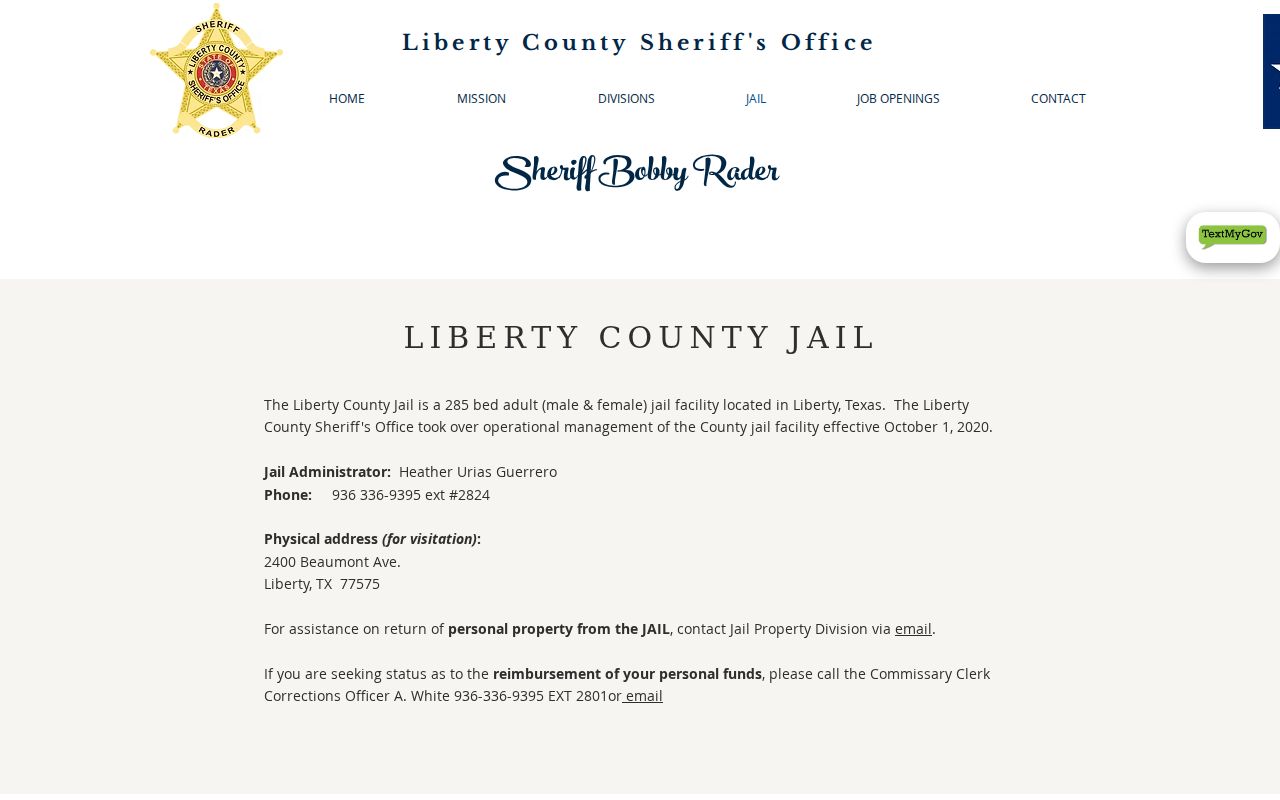
The Liberty County jail page describes a custody facility, not a warrant-search counter. Call ahead for booking or release instructions.
Serving Arrest Warrants in Liberty County
Once a magistrate signs process, an authorized officer or agency may receive it for service or entry. The Sheriff describes its entry role for qualifying warrants. In Liberty County, constables and city police also serve papers and enforce the law. Confirm the serving agency case by case. For a district case, start with the District Clerk. That office sits in Room 115 at the courthouse, 1923 Sam Houston Street, Liberty, and answers at 936-336-4682. Its page links court-record access and lists the courts it serves. That listing routes clerks; it is not a public warrant roster. See the District Clerk's official case-access information to confirm the route.
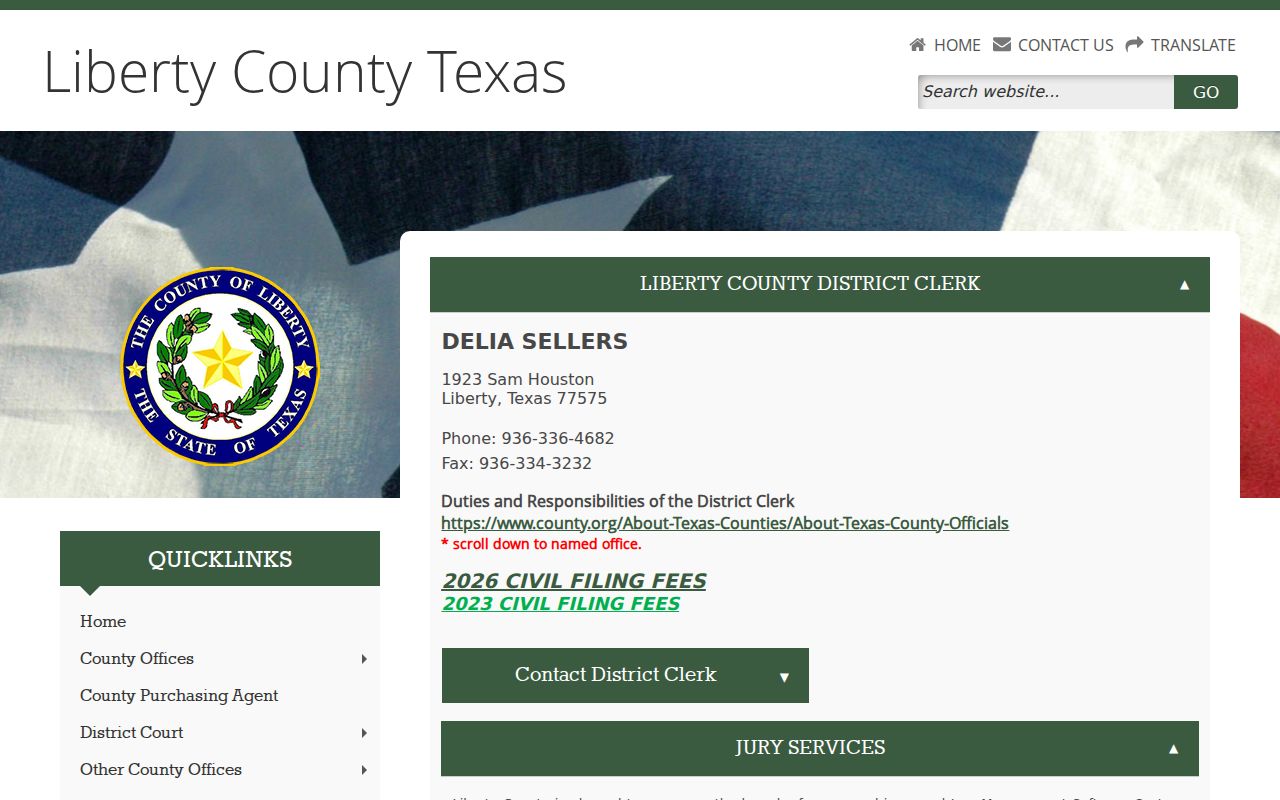
County Court records run through the County Clerk in Liberty County. A city citation or JP case stays with its own clerk.
Liberty County Booking Leads to a Magistrate
After an adult arrest in Liberty County, the holding agency books the person under its own procedure. A magistrate then gives required warnings. Bond and release questions get addressed at that stage. Timing, location, and amount all depend on the case and the custody setting. The Sheriff publishes no universal bond schedule. No guaranteed release time is promised either. The Sheriff's FAQ says booking and a magistrate come before any bond. No pre-booking, no-arrest bond is offered. The jail sits at 2400 Beaumont Avenue in Liberty, but it is not the warrant request desk. Call the jail or Bonds extension for current instructions. The county constable directory lists separate process servers, though it cannot tell you who holds one specific Liberty County warrant. Check Constable Precinct 6's county directory entry for one route.
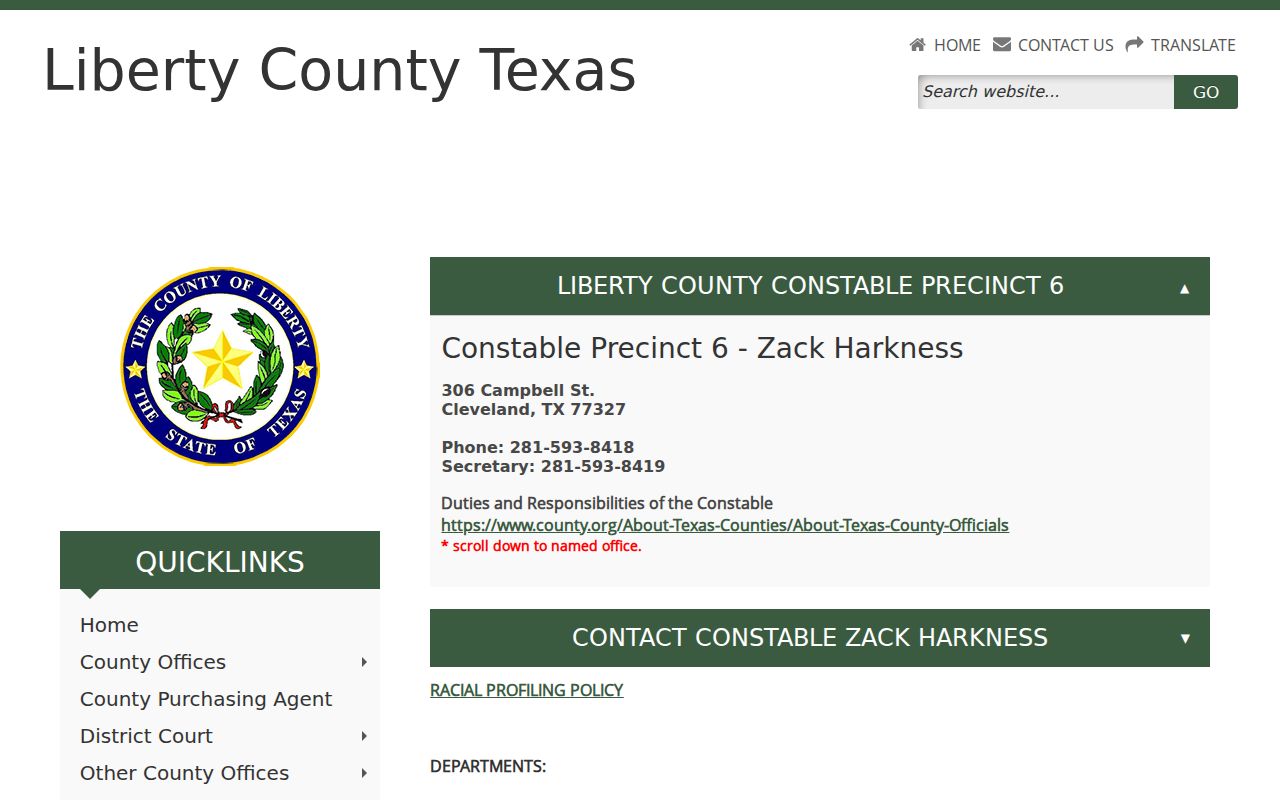
For a specific matter, use the court and agency shown in the official record.
Comparing Arrest, Summons, and Bench Warrants
In Liberty County, these terms mark different steps. A summons orders a person to come to court. An arrest warrant authorizes custody under the statutory process, while a bench or FTA warrant follows a missed appearance or court obligation, subject to notice and court rules.
| Record | Why it appears | Who confirms it |
|---|---|---|
| Summons | Notice to answer or appear | Issuing court clerk |
| Arrest warrant | Magistrate order based on sworn complaint | Issuing court and serving agency |
| Bench or FTA warrant | Missed date or required court step | Court that set the appearance |
In Liberty County, a search warrant authorizes a search, not an arrest. Its affidavit follows separate access and sealing rules under Chapter 18.
Juvenile and Sealed Files Have Limits
Texas Family Code Section 58.010 keeps a child's arrest warrant, complaint, and affidavit confidential except for authorized access. Search-warrant affidavits can be sealed too. Government Code Chapter 552 adds law-enforcement exceptions in some cases. A Liberty County office may tell you a record is not publicly available. That refusal does not prove no process exists. Ask which rule applies. Ask also whether a nonconfidential case record can be requested. Read Family Code Section 58.010 and Texas Government Code Chapter 552 for the cited access limits.
If There's an Arrest Warrant for You
Get a lawyer first, then call the court that issued the warrant. Ask about the cause number, the warrant type, and the bond. Your attorney may be able to set an appearance or file a motion. Remember that a city ticket and a Liberty County arrest warrant follow different routes, even for one person in the same town.
Do not assume an online payment clears an arrest warrant. Confirm the court's instructions and ask what document proves recall or release.
- Identify the court and verify the number using an official contact.
- Ask whether booking is required and when a magistrate will review release.
- Confirm bond terms with the court, jail, or licensed counsel.
- Keep the bond receipt or court order and ask who will update the Sheriff or another agency.
The Liberty County Sheriff's Warrants Division takes no warrant money and offers no no-arrest bond. Its rule is booking first, with a magistrate reviewing before any bond.
Federal Warrants Use a Separate Court
A federal warrant never turns into a Liberty County warrant just because you live here or show up in a county search. Federal cases run through the Eastern District of Texas and federal law-enforcement channels. PACER shows public docket entries, yet it is not a complete list of warrants. Sealed material may not appear at all. For a federal matter, contact the federal clerk or your counsel. For a county matter, go to the Liberty County Sheriff and the issuing court or clerk. A city Tyler portal does not reach federal files. Find federal court information at the Eastern District of Texas, and use PACER for public dockets.